
Housing Market Expected To “Spring Forward” This Year

Just like our clocks this weekend in the majority of the country, the housing market will soon “spring forward!” Similar to tension in a spring, the lack of inventory available for sale in the market right now is what is holding back the market.
Many potential sellers believe that waiting until Spring is in their best interest, and traditionally they would have been right.
Buyer demand has seasonality to it, which usually falls off in the winter months, but that hasn’t happened this year.
Demand for housing has remained strong as mortgage rates have remained near historic lows. Even with the recent increase in rates, buyers are still able to lock in an affordable monthly payment. Many more buyers are jumping off the fence and into the market to secure a lower rate.
The National Association of Realtors (NAR) recently reported that the top 10 dates sellers listed their homes in 2017 all fell in April, May, or June.
Those who act quickly and list now could benefit greatly from additional exposure to buyers prior to a flood of more competition coming to market in the next few months.
If you are planning on selling your home in 2018, call and set a time to meet with the Stovall Team today to evaluate the opportunities in your market. CALL me today at 714.343.9294 and VISIT StovallTeam.com!!
Posted in Real Estate News
Comments closed
These (Mortgage) Rates are on Fire!
Mortgage interest rates have already risen by over a quarter of a percentage point in 2018. Many are projecting that rates could increase to 5% by the end of the year. Since the housing collapse 10 years ago, the U.S Federal Reserve has maintained a loose monetary policy, keeping interest rates low and providing easy access to credit. But with the economy nearing full employment and corporate America raking in record profits, the Fed’s policy is tightening. After years of a fixed 30-year mortgage interest rate below 4 %, that rate is now 4.5% What impact will rising rates have on house values? Well, many quickly jump to the conclusion that an increase in mortgage rates will have a detrimental impact on real estate prices as fewer buyers will be able to qualify for a loan. This seems logical; if there is less demand for housing then prices will drop. However, in a good economy, rising mortgage rates increase demand as many prospective purchasers immediately jump off the fence to guarantee they get the lower rate. Anxiety over rising interest rates was one of the factors that caused the recent stock market swings, and it’s only a matter of time before rising rates seep into the housing market. For prospective homebuyers, rising rates might put some pressure on finding a home sooner than later, as rates are unlikely to get better than they are now. A sense of urgency would be justified because the lower the rate a homebuyer can lock into, the easier it’ll be to make a monthly payment. For a homeowner with a variable-rate mortgage, rising rates would lead to suddenly higher mortgage payments. CoreLogic built a model to project what a typical monthly mortgage payment would be if the rates rose by 0.85 percentage points over the next year, which it calculated by averaging multiple rate increase forecasts, including from Freddie Mac, Fannie Mae, and the Mortgage Bankers Association.
The model assumes a 2.6% rise in real home prices. Taking this into account, the typical monthly mortgage payment would rise from $804 to $910, a 13.3 percent increase. However, when the projection is adjusted for inflation, it’s still 36.4 percent below the all-time high of $1,263 set in June 2006. And for further context of the rate itself, even a dramatic rate increase wouldn’t put it near all-time highs. It’s hard to imagine now, but in the early 1980s, the fixed 30-year mortgage rate was about 18 percent. By the 1990s, it fell to about 10 percent and has steadily fallen ever since. In each case, home prices APPRECIATED and did not depreciate. No one is projecting as dramatic an increase in rates as the examples shown. Most are projecting an increase of approximately 1% by the end of the year. The last time mortgage rates increased by 1% over a twelve-month period was January 2013 (3.41%) to January 2014 (4.43%). What happened to house prices during that span? They appreciated by 9.8%.
How a rate hike will affect home values and the market as a whole is murkier. The tax bill passed in December has numerous implications for housing that may not be fully realized for years to come. Bottom Line When mortgage rates increase, history has shown that prices appreciate (and do not depreciate) during that same time span. Now, more than ever, who you work with matters! Our primary goal is to deliver the highest level of service available to each and every one of our clients. We strive to make each of our listings the best they can be. Is now the time for you to make your move? Call me today at 714.343.9294 Visit stovallteam.com
Sources: Micah Stovall, Bloomberg Business Journal, National Association of Realtors
2 Ways To Get The Most Money From The Sale Of Your Home
Every homeowner wants to make sure they maximize their financial reward when selling their home. But how do you guarantee that you receive the maximum value for your house?
Here are two keys to ensure that you get the highest price possible.
1. Price it a LITTLE LOW
This may seem counterintuitive, but let’s look at this concept for a moment. Many homeowners think that pricing their homes a little OVER market value will leave them with room for negotiation. In actuality, this just dramatically lessens the demand for your house (see chart below).
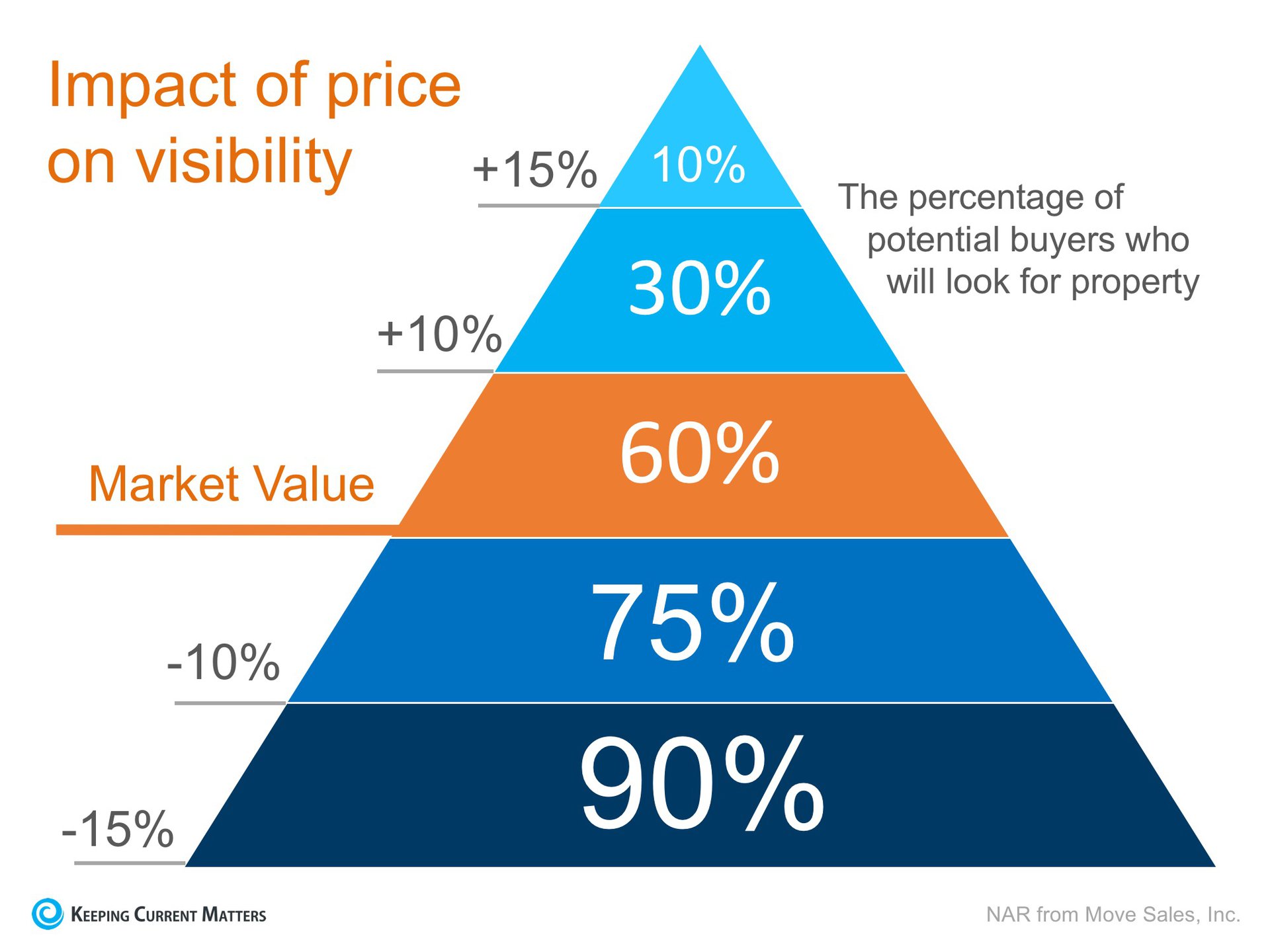
Instead of the seller trying to ‘win’ the negotiation with one buyer, they should price it so that demand for the home is maximized. By doing this, the seller will not be fighting with a buyer over the price but will instead have multiple buyers fighting with each other over the house.
Realtor.com gives this advice:
“Aim to price your property at or just slightly below the going rate. Today’s buyers are highly informed, so if they sense they’re getting a deal, they’re likely to bid up a property that’s slightly underpriced, especially in areas with low inventory.”
2. Use Stovall Team
This, too, may seem counterintuitive. The seller may think they would make more money if they didn’t have to pay a real estate commission. With this being said, studies have shown that homes typically sell for more money when handled by a real estate professional.
A study by Collateral Analytics, reveals that FSBOs don’t actually save any money, and in some cases may be costing themselves more, by not listing with an agent.
In the study, they analyzed home sales in a variety of markets in 2016 and the first half of 2017. The data showed that:
“FSBOs tend to sell for lower prices than comparable home sales, and in many cases below the average differential represented by the prevailing commission rate.”
The results of the study showed that the differential in selling prices for FSBOs when compared to MLS sales of similar properties is about 5.5%. Sales in 2017 suggest the average price was near 6% lower for FSBO sales of similar properties.
Bottom Line
Price your house at or slightly below the current market value and hire Stovall Team. This will guarantee that you maximize the price you get for your house.
Posted in Sellers
Comments closed
The #1 Reason To Sell Now Before Spring
The price of any item (including residential real estate) is determined by ‘supply and demand.’ If many people are looking to buy an item and the supply of that item is limited, the price of that item increases.
According to the National Association of Realtors (NAR), the supply of homes for sale dramatically increases every spring. As an example, here is what happened to housing inventory at the beginning of 2017:
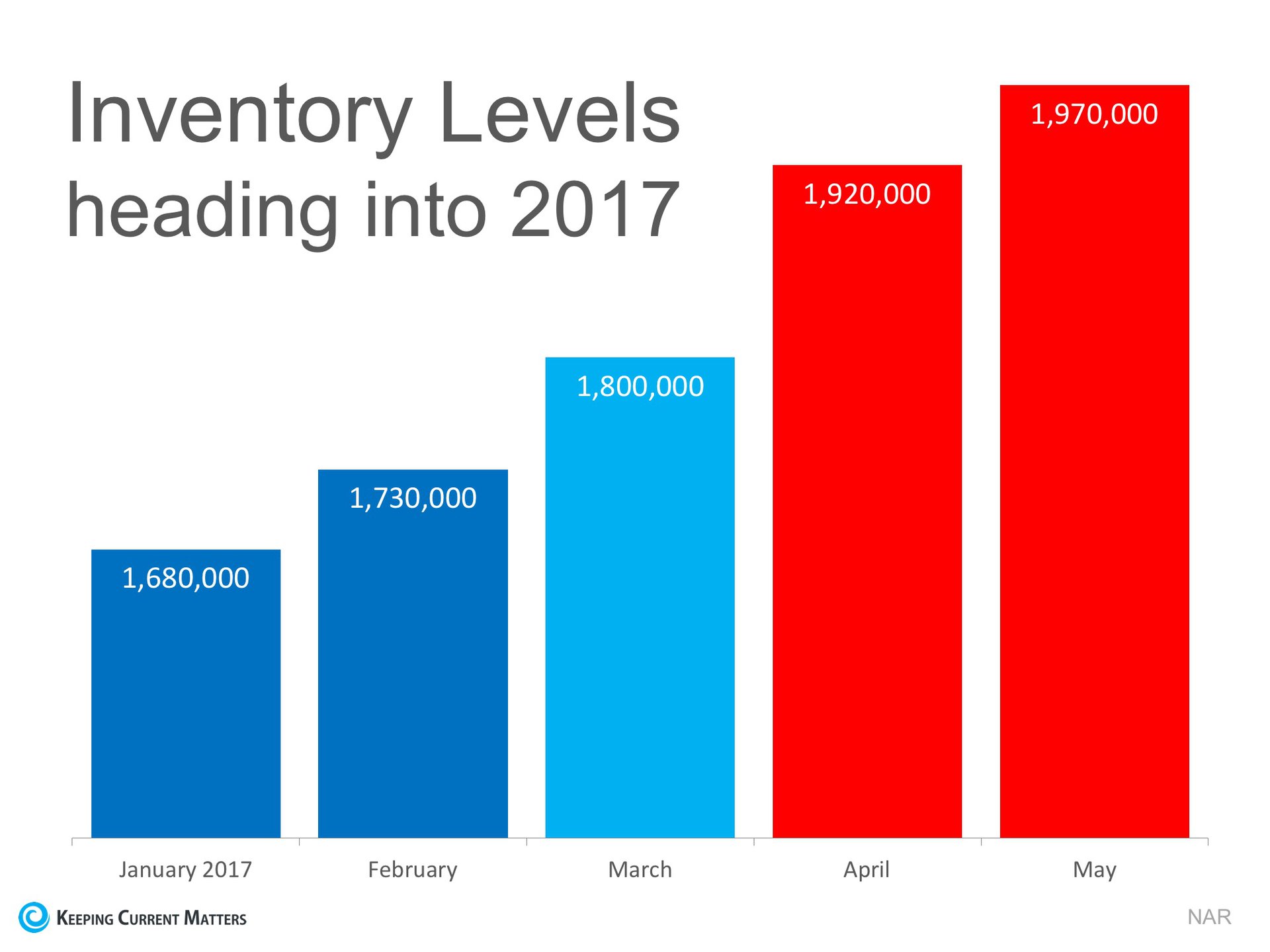
Putting your home on the market now instead of waiting for increased competition in the spring might make a lot of sense. Buyers in the market during the winter months are truly motivated purchasers. They want to buy now. With limited inventory currently available in most markets, sellers are in a great position to negotiate.
Posted in Real Estate News
Comments closed











Surviving the Remodel
If buying a home is all about location, location, location, then remodeling one is all about planning, planning, planning. Whether you’re preparing for a move or looking to update your home, remodeling can be a huge undertaking, so it’s important the reward is worth it. Maybe you’re thinking about upgrading the counter tops, opening up the living room or re-doing the master bath. Or maybe all of the above. But who do you call? A general contractor? Remodeling company? Handyman service? Actually, your first call – before you make any changes – should be to Micah Stovall at Stovall Team. Sure, Stovall Team is your trusted advisor when it’s time to buy or sell a home. But we are also your best source for figuring out what home renovations will yield the best return.
It’s important to have a team of professionals guide you in your remodeling endeavors. The last thing you want to do is make unnecessary repairs or put money into a project that that doesn’t translate well with your buyers, based on your home’s price point and neighborhood.
Stovall Team knows what trends are moving in – and which ones have left the dock. What many consumers don’t realize is that certain upgrades that will bring you above-average returns on your investment. Other improvements may help you sell your home faster, but not necessarily for more money.
Beyond the basics, we need to hold your hand and provide expert advice. Let us help you as you plan your remodel. As Realtors, we are living the market daily. We can help you maximize your investment, even if you are not planning to sell anytime soon.
Call the Stovall Team at 714.614.2475.