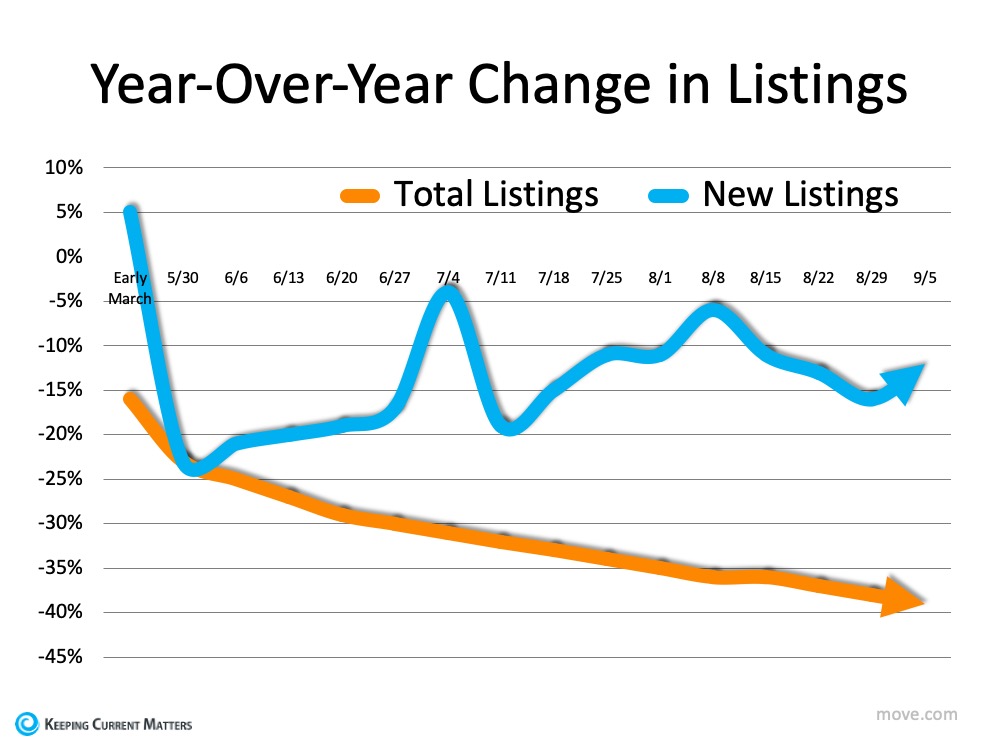
Housing inventory is at an all-time low. There are 39% fewer homes for sale today than at this time last year, and buyer demand continues to set records. Zillow recently reported:
“Newly pending sales are up 25.5% compared to the same week last year, the highest year-over-year increase in the weekly Zillow database.”
Whenever there is a shortage in supply of an item that’s in high demand, the price of that item increases. That’s exactly what’s happening in the real estate market right now. CoreLogic’s latest Home Price Index reports that values have increased by 5.5% over the last year.
This is great news if you’re planning to sell your house; on the other hand, as either a first-time or repeat buyer, this may instead seem like troubling news. However, purchasers should realize that the price of a house is not as important as the cost. Let’s break it down.
There are several factors that influence the cost of a home. The two major ones are the price of the home and the interest rate at which a buyer can borrow the funds necessary to purchase the home.
Last week, Freddie Mac announced that the average interest rate for a 30-year fixed-rate mortgage was 2.87%. At this time last year, the rate was 3.73%. Let’s use an example to see how that difference impacts the true cost of a home.
Assume you purchased a home last year and took out a $850,000 mortgage. As mentioned above, home values have increased by 5.5% over the last year. To buy that same home this year, you would need to take out a mortgage of $896,750. Based on the monthly payment, last year’s mortgage of $850,000 and interest rate 3.73% the monthly mortgage payment (Principal and Interest) is $3,927.Today, with the increased mortgage amount of $896,750 and interest rate 2.87% the monthly mortgage payment (Principal and Interest) is $3,718.
Even though home values have appreciated, it’s a great time to buy a home because mortgage rates are at historic lows. Call me today at 714.343.9294








Is it Time to Move into a Single-Story Home?
Once the kids have left the nest, you may be wondering what to do with all of the extra space in your home. Chances are, you don’t need four bedrooms anymore, and it may be a great time to sell your house and downsize, maybe even into a single-story home. You’ve likely gained significant equity if you’ve lived in your home for a while, so making a move while demand for your current house is high could be your best step forward toward the retirement goals you set out to achieve several years ago.
The dilemma, though, is where to go next. A big concern for many homeowners who are ready to sell is finding a home to move into, given today’s lack of houses available for sale. There is, however, some good news: the number of single-family 1-story homes being built today is on the rise, improving your odds of finding the right home for your changing needs. In a recent article, The National Association of Home Builders (NAHB) explains:
Here’s a map showing the breakdown of newly constructed homes being built by region, and the percentage of 1-story and 2-story homes in that mix: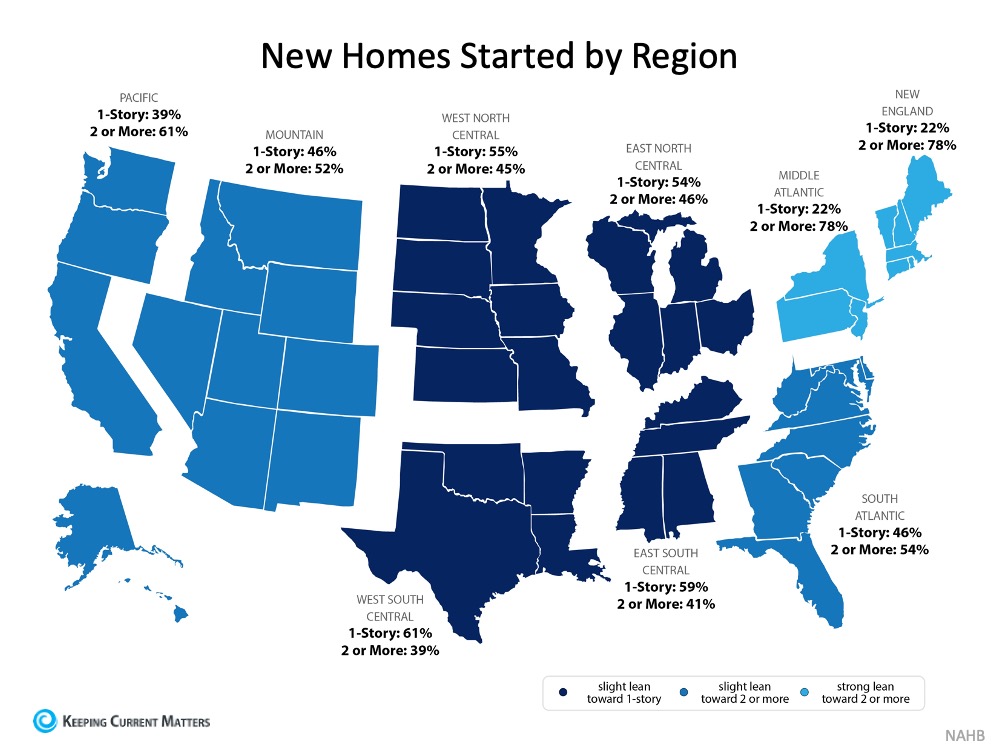
What are the benefits of buying a one-story home?
Still not sure about buying a single-story home? An article from Home Talk covers several advantages of switching from two floors to one:
1. Energy Efficient
Most single-story homes only need one heating or cooling unit, and they typically stay cooler than a two-story home, both of which can lead to significant savings.
2. Easier to Maintain
Cleaning and maintenance of a single-story home can take less time and effort, and better upkeep helps improve the overall value of the home.
3. Accessible for Everyone
If you’re looking for a house that provides a safe and easily accessible environment at any age, a single-story home may be optimal.
4. Good Resell Potential
Single-story homes have a lot of benefits and are often in higher demand. This bodes well for future resale opportunities.
There are many benefits to downsizing into a one-story home. Doing so while demand for your current house is high might make it easier than ever to make a move. Talk to Stovall Team if you’re ready to purchase the single-story home you need while homes are so affordable today. Call me today at 714.343.9294.